Your Protection Checklist — What to Do Right Now
Listen to this lesson
You have made it to the final lesson. By now you understand what AI-powered scams look like and why they work. This lesson is about what to actually do — the specific steps that will protect you and the people you care about.
None of these require technical knowledge. They are habits, not tools.
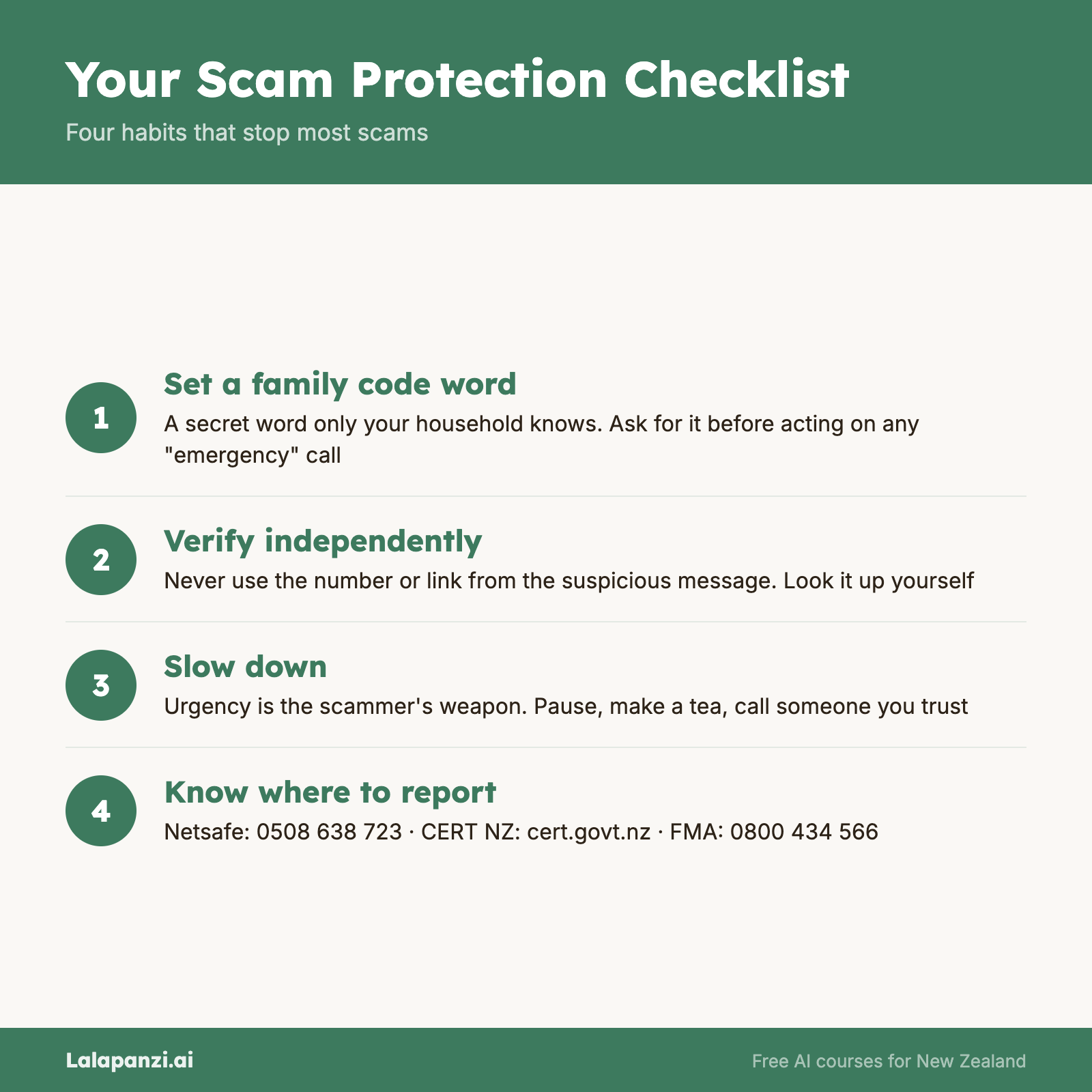
1. Set up a family code word
This is the single most effective thing most families can do right now.
Agree on a word or short phrase that only your immediate family knows. Something random and memorable — not a name, not a birthday, not something easy to guess. Keep it private. Do not put it in a text message or write it somewhere obvious.
If you ever receive an unexpected call from a family member claiming to be in trouble, ask for the code word before doing anything else. A scammer — even one using a cloned voice — cannot provide a word they do not know.
Set this up today. It takes five minutes and it works.
2. Verify through a channel you control
If you receive an unexpected message or call asking you to act — whether it is a payment request, a parcel, a tax refund, or a family emergency — do not use the phone number, link, or contact details provided in that message.
Instead:
- Hang up and call back on a number you already have saved
- Type the website address directly into your browser rather than clicking a link
- Look up the organisation's contact details yourself through a search or a previous statement
This one habit — verifying independently rather than through the channel that contacted you — stops the vast majority of scams cold.
3. Slow down
Urgency is the scammer's most reliable weapon. Almost every scam involves pressure: act now, your account will be closed, your grandchild needs help immediately, this offer expires tonight.
Real emergencies, real banks, and real government agencies do not require you to make decisions in the next five minutes. If something is creating that kind of pressure, treat it as a warning sign, not a reason to rush.
Give yourself permission to pause. Make a cup of tea. Call someone you trust. Take ten minutes. The scam will collapse. A real situation will wait.
4. Know where to get help in New Zealand
If you think you have been targeted by a scam, or if you are unsure whether something is legitimate, here is where to go:
- Netsafe — New Zealand's online safety organisation. Free advice, confidential support, and a reporting tool. Call 0508 638 723 or visit netsafe.org.nz
- CERT NZ — The government's cyber security agency. Reports scams, tracks patterns, and publishes advice. Visit cert.govt.nz
- Financial Markets Authority (FMA) — For investment and cryptocurrency scams. Visit fma.govt.nz or call 0800 434 566
- Police — Call 105 for non-emergency reports. Call 111 if you are in immediate danger or a crime is in progress
- IRD — If you receive something claiming to be from Inland Revenue, forward it to [email protected] before acting on it
None of these services will make you feel foolish for calling. These organisations exist precisely because scams are convincing and because they affect good, careful people every day.
5. If you have already been scammed
First: it is not your fault. These scams are built by professionals who have perfected them across thousands of attempts. Being targeted does not reflect on you.
If you have already sent money or shared personal information:
- Contact your bank immediately — Banks can sometimes reverse or freeze transfers if you act quickly. Explain what happened and ask about their scam recovery process
- Change your passwords — Especially for your email, banking, and any accounts you entered details for
- Report to Netsafe — They can advise on next steps and connect you with further support
- Report to Police — Call 105. Even if recovery is not possible, reporting helps protect others
- Tell someone you trust — Shame and embarrassment are normal reactions, but keeping it to yourself makes recovery harder
Your action list
Here is what to do today:
- Set up a family code word and share it with immediate family in person or by phone
- Save Netsafe's number in your phone: 0508 638 723
- Check that two-factor authentication is turned on for your email and banking apps
- Share this course with someone you care about
That last point matters. Scams work best when people do not know what to look for. Sharing this course with a parent, a neighbour, or a friend is one of the most practical things you can do to protect the people around you.
Share this course with someone you care about.
Visual overview